
The Future of SEO in 2026: Is SEO Still Worth It for Businesses?
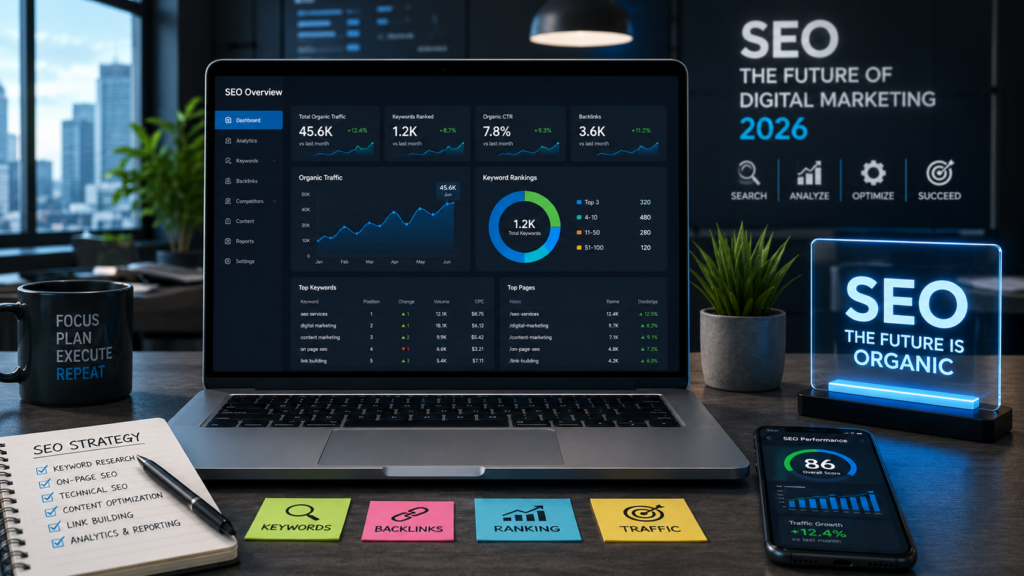
The Future of SEO in 2026 is becoming more advanced as businesses adapt to AI-powered search engines, voice search, and changing Google algorithms. Companies that invest in SEO continue to gain better online visibility, organic traffic, and long-term business growth in the competitive digital market.
In today’s digital world, every business wants visibility online. Whether it is a local startup, an e-commerce store, or a large company, everyone wants their website to appear on the first page of Google. This is where SEO, also known as Search Engine Optimization, becomes important.
For many years, SEO has been one of the strongest digital marketing strategies. But now in 2026, many people are asking an important question: “Is SEO still worth it?” Some believe social media and AI tools will replace SEO completely, while others believe SEO is becoming even more powerful.
The truth is that SEO is not dead. In fact, SEO is evolving rapidly, and businesses that understand these changes are growing faster online.
Earlier, SEO was mainly about stuffing keywords into blogs and building backlinks. But now search engines have become smarter. Google focuses more on user experience, quality content, website speed, and helpful information. Modern SEO is no longer about tricks. It is about providing genuine value to users.
One major reason SEO remains important is user behavior. Whenever people need information, products, or services, they still search online first. Whether someone wants to buy shoes, find a restaurant, hire a digital marketing agency, or learn a new skill, they usually begin with a search engine.
This means businesses that rank higher on Google automatically receive more visibility, more traffic, and often more customers.
Another reason why SEO is still powerful is because of long-term results. Paid advertisements stop generating traffic once the budget ends. But SEO can continue bringing visitors for months or even years if the content is strong and properly optimized. This makes SEO one of the most cost-effective marketing strategies for businesses.
In 2026, content quality has become one of the biggest ranking factors. Google now prefers websites that create useful, original, and engaging content. Generic blogs written only for rankings no longer perform well.
Search engines can now understand user intent much better than before.
For example, if someone searches “best digital marketing strategies for small businesses,” Google will prioritize websites that genuinely explain strategies in detail instead of websites filled with unnecessary keywords.
This shift has changed the way marketers create content. Businesses now focus more on educational blogs, case studies, tutorials, and problem-solving articles. Helpful content builds trust with both users and search engines.
Another major trend shaping SEO is artificial intelligence. AI tools are transforming digital marketing rapidly. Businesses now use AI for keyword research, content planning, analytics, and automation. However, AI-generated content alone is not enough to rank well.
Google still values originality, human experience, and authenticity. Websites that completely depend on robotic AI-written content often struggle because the content lacks emotional connection and real insights.
This is why successful marketers use AI as a support tool rather than replacing creativity completely.
Voice search is also changing SEO strategies. More people now use voice assistants like Google Assistant and Siri to search online. Instead of typing short keywords, users speak complete questions naturally.
Mobile optimization is another important factor in SEO today. Most internet users now browse websites through smartphones. If a website loads slowly or does not work properly on mobile devices, users leave quickly.
Google notices this behavior and may reduce the website’s rankings. Therefore, businesses must ensure their websites are fast, mobile-friendly, and easy to navigate.
User experience is now directly connected with SEO success.
Short-form video content is also influencing SEO. Platforms like YouTube Shorts and Instagram Reels are becoming important traffic sources. Video content increases engagement and helps brands build stronger online visibility.
Google now shows videos in search results more frequently than before. Businesses that combine blog content with videos often perform better online because they keep users engaged longer.
Local SEO is another growing trend, especially for small businesses. When users search for services “near me,” Google prioritizes nearby businesses with optimized profiles and positive reviews.
For example, if someone searches for:
“best digital marketing agency near me”
Google displays local businesses based on relevance, reviews, and location optimization.
This means businesses should focus on:
• Google Business Profile optimization
• customer reviews
• local keywords
• accurate contact information
Local SEO helps businesses attract nearby customers more effectively.
Backlinks still matter in SEO, but quality is now more important than quantity. Earlier, many websites used spammy backlink techniques to rank quickly. Today, Google penalizes low-quality backlinks and rewards websites that earn links naturally through valuable content.
Strong backlinks from trusted websites improve authority and credibility.
SEO is also becoming more competitive every year. Millions of blogs are published daily, making it harder for websites to rank easily. Businesses can no longer rely on outdated SEO methods.
To succeed in 2026, brands need:
• high-quality content
• technical SEO
• mobile optimization
• strong branding
• user-focused strategy
• consistent updates
Consistency is one of the biggest keys to SEO success. Many businesses stop publishing content after a few months because results are not immediate. But SEO is a long-term process.
Websites that continuously create valuable content usually build stronger authority over time.
Another important aspect of modern SEO is trust. Google now evaluates website credibility more carefully. Businesses with secure websites, authentic information, positive reviews, and expert content perform better in search rankings.
Trust has become a major factor in digital marketing overall.
Looking ahead, the future of SEO will continue evolving with technology. AI-powered search experiences, personalized results, and smarter algorithms will
shape how websites rank online.
However, one thing will remain constant:
Search engines will always prioritize user satisfaction.
Businesses that focus on helping users instead of manipulating algorithms will continue succeeding.
In conclusion, SEO is absolutely still worth it in 2026. In fact, it is becoming more valuable for businesses that understand modern search behavior and create meaningful content.
SEO today is not simply about rankings. It is about visibility, trust, user experience, and long-term digital growth.
As competition online continues increasing, businesses that invest in strong SEO strategies will have a major advantage in the digital world.